
AKW Offer Dementia-friendly Bathroom Design

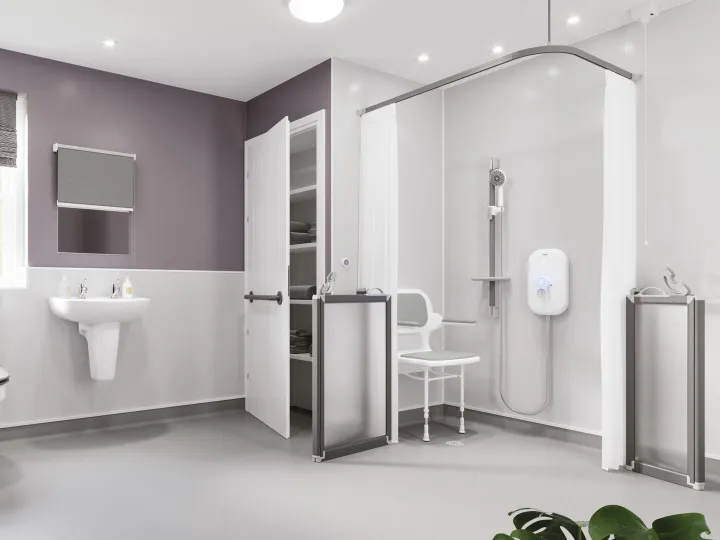

Approximately a million people in the UK have a form of dementia at present and it is estimated that one in three people born in the UK today will develop dementia in their lifetime. With neurological conditions such as dementia on the rise, Stuart Reynolds, UK Marketing & Product Management Director at AKW, discusses how bathrooms can be made more accessible for those living with the condition.
By 2040, 1.4 million people will be living with dementia in the UK, and many millions more carers, partners, families and friends will be affected. As any reader of Inclusive Design will know, good design can change someone’s life dramatically, helping them use spaces that were either previously inaccessible or that had become harder and harder to access over time.
When it comes to dementia and bathrooms, good design is essential. That is because the bathroom is one of the most difficult spaces to navigate for those living with the condition.
“Good design is substantially more complex than just making physical changes to the built environment, and the bathroom, despite being one of the smallest rooms to design in any building, is one of the most complicated,” explained Lynsey Hutchinson, Senior Interior Designer at the Dementia Services Development Centre (DSDC), University of Stirling.
“Indeed, there are at least ten tonal considerations within a bathroom or shower room. These include tonal contrast for surfaces/critical planes such as walls, floors, doors, skirtings, sanitary ware and toilet seats which should achieve a minimum contrast of 30 points LRV (Light Reflectance Value) in order to see one object against another.”
Good design for cost-effective dementia-friendly bathrooms
It is worth noting that a dementia-friendly bathroom doesn’t usually cost any more than those for a standard bathroom adaptation for the elderly. The key is good design and using the right products.
So, here are the latest AKW and DSDC approved recommendations that can be taken as current best-practice for creating more dementia-friendly accessible bathroom spaces:
Minimum 30-point LRV: Tonal contrasts are needed of at least 30 points LRV (Light Reflectance Value) between surfaces, to make it easier for those with dementia to navigate the space. Sanitary fittings need to contrast with the wall and the toilet seat with the pan/cistern. Also, toilet roll holders and grab rails must contrast with the walls, and the shower curtain and seat with the rest of the showering area.
Floor colour choice: The floor needs to be a single, lighter colour that has no patterns or flecking (as these can be mistaken for dirt or holes and increase the possibility of falling). The maximum LRV difference of the bathroom flooring and adjacent rooms should be 10 points between the floor covering colours.
Removing hazards: People with dementia are twice as likely to fall as others in their age group, therefore products with sharp edges are to be avoided, PET plastic shower screens used rather than glass, and a level access shower with shower seat installed, rather than a bath.
Overcoming memory issues: Minimising reflective surfaces will help reduce confusion (e.g. A roller blind above mirrors and frosted shower screens). Promotion of retro memory using more traditional fixtures and fittings is also recommended. Also, to minimise accidents, showers with auto shut offs, thermostatic taps and showers, and low surface temperature radiators are recommended.
Choosing dementia-friendly products
Choosing the right products can significantly help those living with dementia. For example, when it comes to showering, thermostatically controlled showers are better as they are safer for users who have cognitive disorders.
AKW’s SmartCare Plus and SmartCare Lever electric showers have easy to understand and use controls, rounded edges to minimise injury risk in the event of a fall, and automatic shutdown to prevent flooding. AKW’s TMV3 approved Arka Care Mixer shower is also ideal for care home applications.
With tonal contrast so important for those navigating the bathroom space, AKW has developed safety flooring in six DSDC accredited colour options that are also slip resistant. They all have the highest possible rating value (1a): Ivory (LRV56), Cement (LRV55), Wedgewood (LRV26), Beige (LRV46), Dove (LRV38) and Dusk (LRV13). Tonal contrast coloured shower seats and support rails are also available.
In addition, choosing a highly cost-effective alternative to tiles, such as AKW’s Origins and Alveo wall panel ranges, can deliver cost savings of up to 40%*. However, it is worth bearing in mind though that the plain colour, matt finish wall panels are the most suitable and recommended by the DSDC.
Thanks to these recommendations from the DSDC and AKW, specifiers and installers can create more accessible bathrooms for those with neurological conditions, without breaking the bank.
This guidance is based on work with the University of Stirling’s Dementia Services Development Centre (DSDC).
Click here to download the full guide on best-practice advice.
*40% cheaper than installing tiles on a standard 3m x 2m bathroom, with savings of approximately £300 per job. Source: local contractor October 2024.