Buying More Time

The most meaningful test of inclusivity often shows up in an emergency, when stress is high, time is limited, and people’s abilities can change instantly. Adam Hessel of BlazeMaster explains how fire sprinklers are redefining inclusive safety in UK care homes.
Inclusive design is about creating environments that are safe, usable and dignified for everyone, regardless of age, ability, health or circumstance. At first, one might think of the visible elements: step-free access, clear signage, good lighting or bathrooms that accommodate different needs.
In UK care homes, inclusive design has a particularly urgent purpose: protecting residents who may not be able to self-evacuate. Limited mobility, sensory loss, frailty and cognitive conditions such as dementia can make standard “get out quickly” fire strategies unrealistic. This is why life safety in care settings can’t rely on the same assumptions used for offices or even general housing.
With a growing ageing population, the role of care homes has never been more important. More than 400,000 people live in UK care homes. That number represents not only a large community, but a group that depends on the built environment, and the systems within it, to reduce risk and support safe outcomes.
Fire sprinklers are increasingly central to this conversation. Not because they “tick a box”, but because they change what’s possible in a fire: buying time, reducing smoke and heat, and supporting staff to carry out evacuation and rescue in a calmer, more controlled way. In other words, sprinklers don’t just meet regulations; they help deliver inclusive safety.
Why fire safety in care homes is different
Fire safety in care homes is complex because the people inside the building are different, as are their needs.
Many residents may:
- need walking aids or wheelchairs
- require hoists or multiple staff to transfer safely
- have hearing or visual impairments that affect alarm response
- live with dementia, delirium, or anxiety that can make instructions confusing or distressing
- be asleep, medicated or otherwise unable to react quickly
These are just some of the human factors of fire response. Evacuation is rarely a single action. It can involve waking residents, calming them, locating personal mobility aids, moving them safely (sometimes with medical equipment) and ensuring continuity of care during and after the incident.
In practical terms, that means staff time is the limiting factor. Even highly trained teams cannot instantly relocate a large number of people who need assistance. The reality is that a fire can escalate in minutes; especially once smoke begins to spread. Smoke is often the greatest danger in building fires, particularly for older people or anyone with respiratory or cardiovascular conditions.
A changing legislative landscape
Recognising the need for stronger protection in high-risk residential settings, the UK government introduced new fire safety legislation affecting care homes. All newly constructed care homes are now required to install fire sprinkler systems. This is a significant shift: it treats automatic suppression not as an optional feature, but as a baseline expectation in buildings designed for people who are least able to escape unaided.
It also signals a wider change in mindset. Instead of focusing only on compliance and evacuation calculations, the sector is increasingly being asked to consider how buildings can actively reduce harm.
However, many care homes are not new builds. A substantial portion of the UK care estate consists of older properties; some purpose-built, many converted or extended over decades. These buildings may have:
- Complex layouts
- Mixed construction types
- Limited service voids
- Constraints around water supply, access and disruption
- Residents living in place throughout any upgrade works
That creates a critical challenge: how do we raise safety standards in existing care homes without undermining residents’ comfort, routines or wellbeing?
This is exactly where inclusive design principles matter. Retrofitting must be designed around the real lives of residents.
Fire sprinklers as inclusive design: safety that adapts to people
Inclusive design is sometimes described as designing for the edges, because when you design for the most vulnerable users, everyone benefits. Sprinklers fit that philosophy perfectly.
A sprinkler system doesn’t depend on a resident hearing an alarm, understanding instructions or moving quickly. It responds automatically, at the earliest stage, where it can make the biggest difference. This is crucial in care homes, where the people most at risk have the least capacity to take protective action for themselves.
Sprinklers aren’t just plumbing. They are part of an environment that communicates, “you are protected here, even if you can’t protect yourself quickly.”
The human reality: sprinklers support staff under pressure
In most care homes, the success of any emergency response depends heavily on staff. Staff are expected to:
- Locate the fire origin (if safe)
- Call emergency services
- Reassure residents and prevent panic
- Coordinate progressive evacuation
- Manage medication or clinical needs during relocation
- Keep track of residents and visitors
- Communicate with families and external responders
That is a lot to ask in a fast-developing fire, especially at night with lower staffing levels.
Sprinklers reduce the intensity of the event that staff are responding to. They can slow fire growth, reduce radiant heat and limit smoke spread, making it more feasible to carry out assisted evacuation safely and methodically. It’s giving staff a safer, more controllable situation to work within.
Keep in mind, staff are part of the “user group” too. A building that supports staff performance under stress improves safety outcomes for residents.
Retrofitting care homes with minimal disruption
Retrofitting older care homes can feel daunting, especially when buildings are occupied. Traditional sprinkler installations using steel pipework can be noisy, labour-intensive and disruptive. Drilling, threading, lifting heavy pipe and extended work times can interfere with daily routines and cause stress for residents, particularly those sensitive to noise, unfamiliar people or environmental change.
This is where BlazeMaster CPVC (Chlorinated Polyvinyl Chloride) fire sprinkler systems are often considered. CPVC is a non-metallic material designed specifically for fire sprinkler pipework, and it brings a number of practical advantages for retrofit environments:
Quick and quieter installation
CPVC is lightweight and typically easier to cut, handle and install than steel. In a care home, “quieter” is not a minor benefit. Reducing prolonged noise and disruption can help maintain calm, support sleep and minimise distress, especially for residents living with dementia or anxiety.
Less disruption to routines and spaces
Inclusive retrofits aim to keep residents living safely in place. Faster installation can support phased working, shorter closures of rooms or corridors, and better continuity of care. This reduces the likelihood of residents being temporarily moved; a change that can be deeply unsettling for some people.
Corrosion resistance
Corrosion can create long-term maintenance issues in any building services system. CPVC’s corrosion resistance can support reliability over time and reduce intrusive maintenance work; another factor that helps keep environments stable and predictable for residents.
Durability and performance in fire scenarios
CPVC systems used in sprinkler applications are engineered for fire protection use. In inclusive safety terms, reliability is everything: a system that is less prone to degradation supports long-term resilience.
Specifying fire safety for the future
As new requirements take effect, demand will grow not only for sprinklers, but for high-quality specification and installation that reflects the realities of care environments. Architects, engineers, fire safety professionals and care providers will all have a role in ensuring that systems are:
- Appropriate for the building type and resident needs
- Designed to integrate with evacuation strategies and compartmentation
- Maintainable over the long term
- Installed with minimal disruption and maximum reliability
BlazeMaster Fire Protection Systems supports this work through practical resources. The Orange Book is positioned as a comprehensive guide to specifying BlazeMaster CPVC systems and aligning designs with relevant standards. For teams who need speed and consistency in early project stages, BlazeMaster Fire Protection Systems also provides an Online Specification Generator, allowing users to create tailored system documentation based on project requirements.
For inclusive design, these tools matter because they reduce ambiguity. When specification is clearer, installation is smoother, quality is more consistent and the end result is more dependable; exactly what vulnerable settings need.
Sprinklers as a foundation of inclusive safety
The new fire safety regulations for UK care homes represent more than a compliance milestone. They reflect a broader, more human understanding of safety.
In care homes, inclusive design means designing for the reality that some residents cannot self-rescue. Fire sprinklers support this by controlling fire early, reducing heat and smoke and buying time; time for staff to act, time for safe movement and time to prevent a small incident becoming a catastrophic event.
For existing care homes, retrofit programmes are an opportunity to raise standards without sacrificing comfort or continuity. With modern approaches and materials such as BlazeMaster CPVC, it’s possible to strengthen life safety while minimising disruption, protecting the physical safety and emotional wellbeing of residents.
Ultimately, inclusive care home design is about living well and being protected when things go wrong. Sprinklers help make that protection real, quietly and automatically.
Click here to visit the BlazeMaster website, or email blazemaster.emena@lubrizol.com
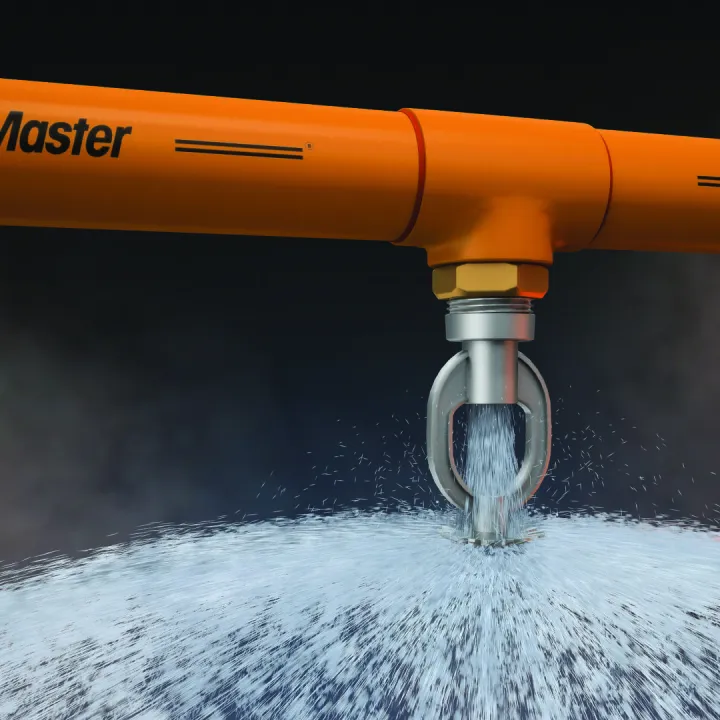 BlazeMaster CPVC is lightweight and typically easier to cut, handle and install than steel
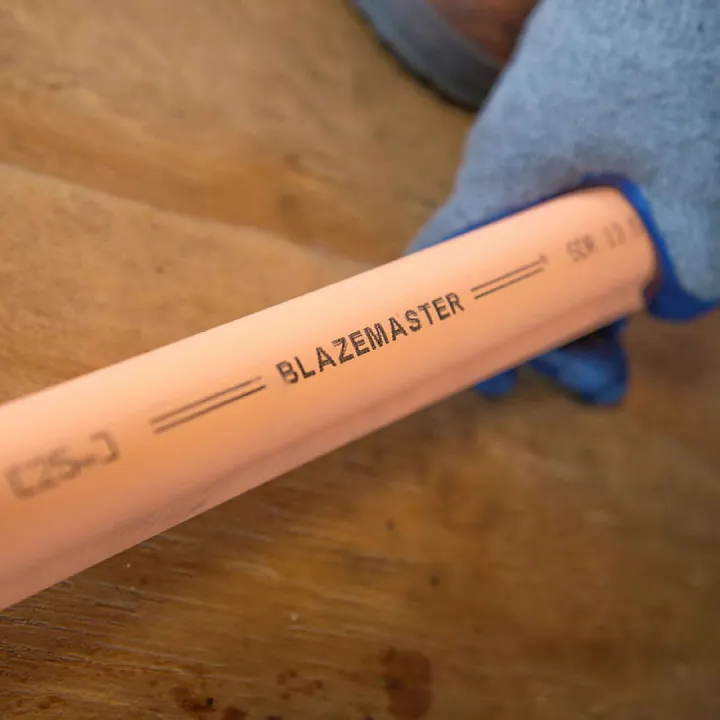 BlazeMaster CPVC (Chlorinated Polyvinyl Chloride) is a non-metallic material designed specifically for fire sprinkler pipework
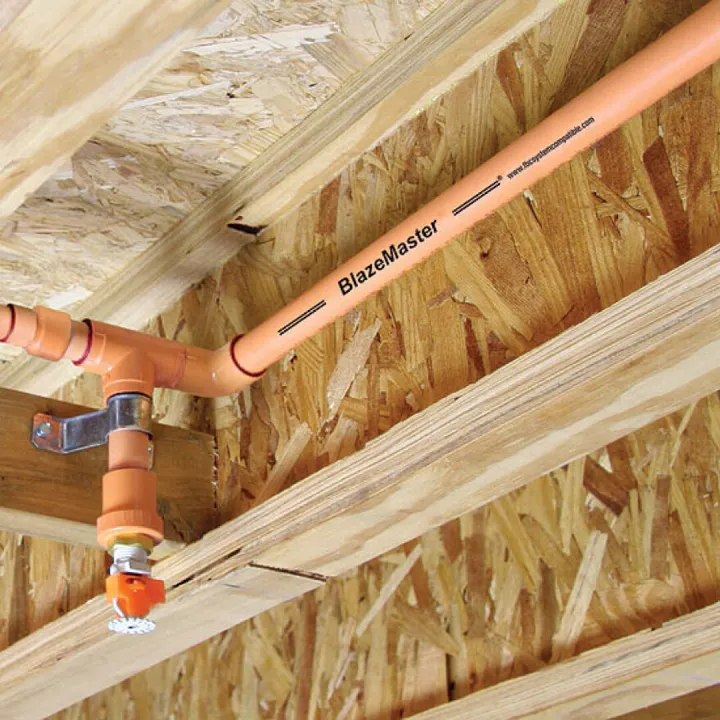 Adam Hessel is Market Development Manager, Fire Protection (EMEA) for Lubrizol Limited's Temprite division