
Drawing on experience
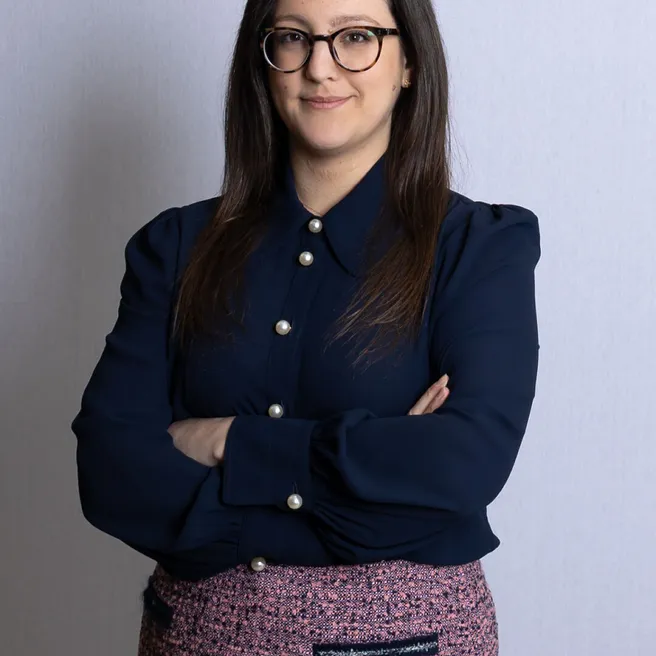
Care home design architects Carless + Adams have recently expanded their Senior Leadership Team with the promotion of Vicky Kolliopoulou to Associate. Inclusive Design Magazine caught up with Vicky to find out more about her role, her responsibilities, and challenges.
Carless + Adams is an award-winning, independent Architectural Practice, providing professional advice and services in architecture focussing solely on design for care.
The team delivers a wide spectrum of projects within the sector, including care homes (residential and nursing), dementia care homes, integrated retirement communities, cottages and retirement villages, extra care apartments, healthcare centre, specialist care, refurbishment and extensions, green belt, heritage assets and conservation areas.
In her new role, Vicky will lead projects across design and technical delivery, while also supporting ongoing business development initiatives. Her strong sustainability credentials will play a key role in reinforcing the practice’s commitment to environmentally responsible care sector developments.
Tell us about your day-to-day responsibilities
As an Associate, my role combines leadership, design oversight, and business development. I support the Directors in both the day-to-day running and strategic growth of the practice, while leading project teams across all RIBA stages to deliver high-quality, functional schemes for our clients. I manage relationships, programmes, and project outputs to ensure delivery on time and within budget.
Alongside this, I’m responsible for mentoring and developing team members, overseeing resourcing, and identifying new business opportunities helping to shape the direction of the practice while maintaining a strong focus on design quality and client satisfaction.
Is your career what you envisaged when you were at school?
Yes, I always knew I wanted to become an architect. The only slight variation was when I was a child, when I thought about becoming an artist or painter, as I’ve always loved drawing and was naturally drawn to it.
In many ways, architecture has allowed me to combine both creativity and technical thinking, which is exactly what appealed to me from the beginning, and that balance is still what I enjoy most about the profession today.
What was your first job, and did this contribute to your current role?
My first job was actually a private commission around 2010, creating a physical architectural model for a villa. The client struggled to visualise the design through drawings alone, so the model became an important way of communicating the idea.
Looking back, it was a valuable early lesson in the importance of clear communication in architecture, ensuring that designs are accessible, understandable and meaningful to the people they are created for, not just those within the profession.
How long have you worked in this industry, and how long in specialist design?
I’ve been working in the industry since 2015 and have spent the past two years with Carless + Adams. Throughout my career, I’ve gained experience in the care sector, including SEN schools, SEND resource provisions, and various forms of specialist and temporary accommodation.
Was there anything in particular that brought you in to this sector?
I’ve always been fascinated by architecture, particularly the way it brings together art and engineering to shape how people experience spaces in their everyday lives. Growing up in a creative environment had a strong influence, one of my parents is an architect and the other a graphic designer, so design was always part of my world.
I was also fortunate to gain early exposure by helping with projects while I was still at school, which gave me a practical understanding of how ideas develop into buildings.
Over time, that interest naturally evolved into a focus on the care and specialist sectors. I find it particularly rewarding to work on projects where design can have a direct and meaningful impact on people’s quality of life, supporting independence, dignity and wellbeing.
What is the main challenge you face in work?
Another important aspect is working collaboratively with clients to achieve the right balance between aspiration, practicality, and long-term value. Ensuring there is a shared understanding of the brief, while also advocating for the end users, is essential. For me, the priority is always the people who will ultimately use the space, good design should respond to their needs, enhance their experience and stand the test of time.
What are you currently working on?
I’m currently working on a couple of new-build care homes that are at construction stage ranging from high-end, luxury schemes to more accessible developments, and a couple of other projects that are within the initial design stages and are of similar output. Across all of them, the focus is on creating environments that are not only visually appealing, but also practical, comfortable and supportive for residents and staff alike.
Anything in the pipeline you can share?
One project I’m particularly excited about is the first EasyResidences care home, which is focused on delivering high-quality care for a broader demographic. It’s a project that aligns closely with my own values; creating well-designed, thoughtful spaces that genuinely improve people’s lives, regardless of their background or circumstances.
Schemes like this reinforce the idea that inclusive design is not just about meeting specific requirements, but about creating spaces that are thoughtful, adaptable and genuinely enhance everyday life.
Do you have any long-term plans/ambitions in this sector?
My long-term ambition is to be able to look back and know that the work I’ve been involved in has made a positive difference to people’s lives. Whether that’s through improving living environments, supporting independence, or simply creating spaces where people feel comfortable and valued, that impact is what matters most to me.
Alongside that, I want to continue developing within the industry, strengthening my leadership role, contributing to the direction of projects and the practice, and building a reputation for delivering thoughtful and high-quality design.
Have you won any industry awards?
A previous project I led, providing temporary accommodation, received an award for Best Residential Development and was also highly commended for Best Sustainable Project.
What are your most proud moments?
One of my proudest professional moments was hearing how families moved into that temporary accommodation just before Christmas. It was a challenging project to deliver but knowing it had such a direct and positive impact made it incredibly worthwhile. It’s a reminder of the real value of what we do as architects.
On a personal level, sharing my achievements with my parents is something that stands out. Their influence and support have shaped my journey, so seeing how proud they are is very meaningful. I also value the everyday moments, positive feedback from clients or team members, or seeing someone within the team grow and develop. Those are often the most rewarding parts of the role.
Family has always been very important to me, both personally and professionally. Their support has played a significant role in shaping who I am, and being able to make them proud is something I value greatly.
Do you have any interests outside of your work?
Drawing is still a big part of my life. I tend to focus on portraits rather than landscapes or cityscapes. I find people far more engaging and expressive. It is a great way to stay connected to my artistic side.
If you had not become an architect, what would you do?
If I wasn’t an architect, I would most likely have pursued a career as an artist. That said, I do think there’s something to be said for keeping a creative passion separate. There is a certain freedom in it that can be hard to replicate when it becomes your profession.
Given the opportunity to take up to six months paid leave (and assuming your partner had the same), what would you do?
I would spend it on a sunny island in Greece with my husband, enjoying a slower pace of life and making the most of that time together. Taking a step back, recharging and appreciating the simple things is something that feels increasingly important, and often overlooked.
Click here to find out more about the work of Carless + Adams.