
The Future of Retirement Living

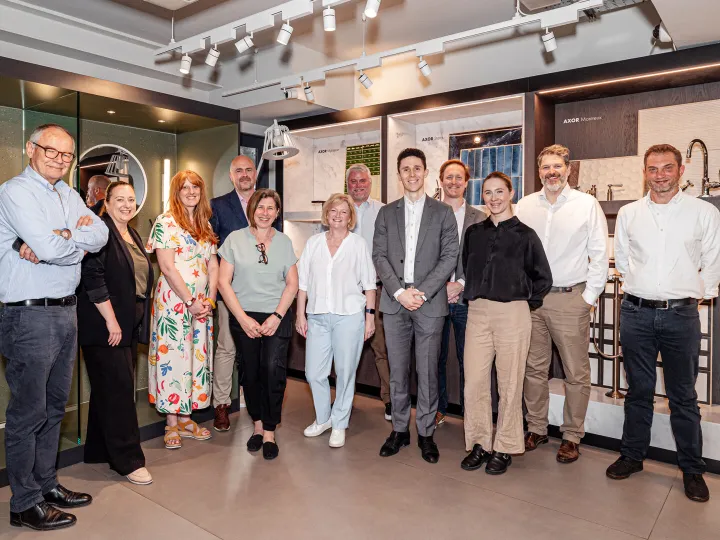
In a recent roundtable, Hansgrohe asked integrated retirement communities (IRCs) “can cost, value, and sustainability align?”
The roundtable, held in Hansgrohe London Water Studio and hosted in partnership with the Associated Retirement Community Operators (ARCO), examined the role of cost, value, and sustainability as the development of more integrated retirement communities (IRCs) look set to expand.
Attendees included representatives from Audley Group, Berkeley Healthcare, Octopus Real Estate, PRP, Rangeford Villages, TIS and Trowers & Hamlins LLP.
An ageing population and changing preferences for community-oriented living has fuelled continued growth in retirement communities over recent years.
According to ARCO, there are currently around 70,000 IRC units in the UK, providing homes for just over 90,000 older people. But with demand predicted to rise with the growth of an ageing population, there are both challenges and opportunities for key stakeholders such as operators and investors, as well as architects and suppliers.
To gauge current thinking and share insight for this important sector, Hansgrohe recently hosted an invitee-only round table in partnership with ARCO. The event, Cost vs Value vs Sustainability – The Challenges and Opportunities for Operators of IRCs and their Supply Chain, brought together a cross section of organisational representatives from trade bodies, operators, investors, architects, and suppliers to examine critical issues linked to IRC development and management.
Some of the key themes to emerge from the session included:
Growing pressure around environmental, social and governance (ESG)
Attendees highlighted the rise of a focus on ESG-related issues. Improved measurability and reporting are increasingly being required to satisfy demands from Investors funding the scheme development. With investors looking for their initial outlay to be immediately appealing to potential residents and continue to be profitable in the years to come, this was seen as a key aspect driving the sustainability and ESG agenda.
Highlighted by participants was the need for an ongoing balance between building cost competitively and ensuring a more sustainable future through the design, contracting and supply stages. Conversely, funders also have the power to redirect thinking to mitigate sustainability-related cost investment if they so wish and the entire supply chain is mindful of this critical factor.
In addition, it was also clear to delegates that ongoing cost of living pressures for unit owners, especially around energy costs, is another recent trend influencing system and solution specification.
Sustainable choices
With the need to decrease and eventually remove expensive and high carbon energy sources such as gas from IRC developments, there was general agreement that renewable alternatives such as installing heat pumps are a positive way to provide cheaper and greener heating and hot water supply and create more sustainable IRCs.
Continued improvements to technology and accessible user interfaces can help overcome end user concerns about such sustainable solutions.
However, it was also pointed out that the upfront cost of ESG implementation can be a barrier with budget pressures often linked to commencing the initial development build, as opposed to assessing and appreciating clear long term building performance benefits.
Future pressures around essential services such as water supply and consumption were also identified. This ranged from the need to source and protect adequate future water supply and reuse more generally, to the merits of specifying water-related solutions for unit owners which can help reduce water consumption levels without compromise, for example, to the showering and living experience.
It is important that messages around component solutions that can tackle energy efficiency, consumption levels and energy bills are proactively communicated to generate public confidence and a wider understanding that such measures are increasingly central to future IRC designs.
Cost
A combination of building inflation and the rapid rise in material and labour costs in recent years, means the supply chain has a key role to play regarding competitive construction and operation of IRCs.
“With the design and sustainability of IRCs an important and growing sector, we were delighted to partner with Hansgrohe to bring together a wide range of organisations, as well as the supply chain, to discuss the challenges and opportunities they are currently facing,” said ARCO Chief Executive, Michael Voges.
“We covered areas such as investment and planning, design and development, construction, and operation, to test current thinking about how cost, value and sustainability factors are influencing the decisions made on the ground.
“Whilst everyone acknowledged the need to design, build and operate in a more sustainable way, it is also clear that demonstrating value for money, underpinning available budgets and being mindful of cost pressures, are part of an ongoing balance all stakeholders must strike.”
Brand and Communications Manager for Hansgrohe UK, Emma Freeman added: “At Hansgrohe, we are well known for our water-saving innovations. We are proud to lead the way by bringing products to market that help to conserve this precious resource whilst retaining a fantastic, product experience modern customers have come to expect.
“However, for those working on commercial projects, selecting these options requires absolute justification in terms of value. This is why we have Environmental Product Declarations (EPDs) for over 1,400 of our best-selling chrome products, which provide the supply chain with essential information on flow rates, water, and energy consumption and CO2 balances, as well as the origin and composition of materials and recycling options, so they can make informed decisions that are underpinned by robust evidence.”