
Obituary: Graham Findlay
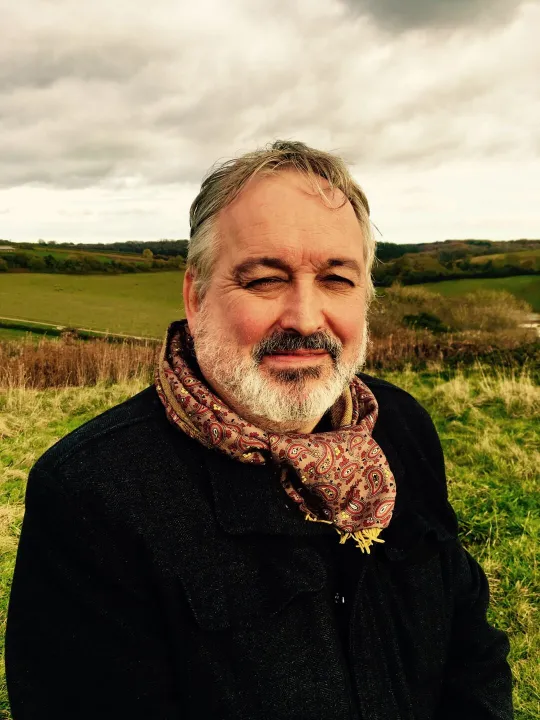
Graham Findlay, a tireless and influential advocate for disabled people’s rights, died on 4th February 2026.
Graham dedicated his career to advancing inclusion, with a particular focus on access to the built environment, housing and the natural world.
From his academic roots in Cultural and Critical theories to establishing a bookshop in Cardiff and training in social and probation work, his path was diverse. Yet, his core purpose always remained rooted in his experience as a disabled man, driving a powerful commitment to disability activism and campaigning.
Passionate campaigner
Having studied Accessibility and Inclusive Design at the University of Salford (2001 – 2003), Graham worked at Disability Wales for many years as a Senior Access Officer. In that role, he led on policy, campaigning and engagement across accessible housing, transport and countryside access within Wales. He later continued this work UK-wide with the Chartered Institute of Housing and Scope and through his own consultancy, Findlay Equality Services.
Writing for the British Film Institute’s Disabled Britain on Film collection, he encouraged viewers to reflect on how design, whether related to adapted environments or products, play a key role in defining and reframing disabled people’s lives. He also explored the technological advances and shifts in perception that have shaped the history of disability on screen and utopian visions for the future.
Up until his passing, Graham provided access auditing, policy review, training and mentoring for Arts Council England, Tai Pawb, a Welsh charity dedicated to fostering inclusivity in the housing sector, and many housing associations. He co-chaired the Disability Research on Independent Living and Learning (DRILL) and was a board member of the Genomics Partnership Wales.
Champion of consultation & collaboration
A highly respected specialist in inclusive design and accessibility, Graham combined deep technical knowledge with a clear commitment to practical change.
He was widely recognised for his expertise in access auditing, housing policy and inclusive environments, but above all for his insistence that disabled people must be at the centre of decision-making. He was a leading advocate for genuine co-production and meaningful consultation, consistently challenging organisations to move beyond tokenism and embed inclusive practice as standard.
Through his work with colleagues across the sector, including collaboration with the Centre for Accessible Environments (2016 – 2026), he championed approaches that placed lived experience at the heart of design, policy and delivery.
Graham was also a strong and thoughtful voice in national housing debates. He argued that accessibility and sustainability must go hand in hand, rather than being treated as competing priorities, and was critical of incremental approaches that failed to deliver real change. He called for accessible, sustainable homes to be a central strategic objective, warning that without this commitment, inclusion would continue to be sidelined.
Leading through lived experience
Graham’s professional work was grounded in his lived experience as a disabled person and as the father of three disabled children, which gave his advocacy both clarity and urgency.
He understood first-hand the barriers faced by disabled people and worked relentlessly to remove them, particularly in relation to independent living and access to nature. His work with countryside access forums, national parks and public bodies reflected his belief that disabled people should not be excluded from the natural environment.
He is widely remembered in the sector as warm, witty and quietly formidable. He was generous with his knowledge, a supportive mentor to many, and someone who took genuine pleasure in challenging the status quo and ‘shaking things up’ in pursuit of fairness and justice.
Outside his professional life, Graham had wide-ranging interests including drumming, music, film, television and theatre, and was a keen camper who believed strongly that disabled people should be able to enjoy the outdoors without barriers.
His legacy
Even while living with serious illness, including cancer and dystonia, Graham remained determined, hopeful and characteristically sharp in his humour. He faced these challenges with honesty and resilience, continuing to contribute, influence, and inspire those around him.
His legacy is not only in the policies he influenced or the standards he helped shape, but in the people, he inspired and the uncompromising belief he held—that everyone, including disabled people, must be heard, included, and valued as equal contributors to society.
Graham is survived by his wife Julie, three children, and his wider family. His passing is a profound loss to them, the disability rights community and to the many colleagues, collaborators and friends whose work and thinking he helped shape for over three decades.